|
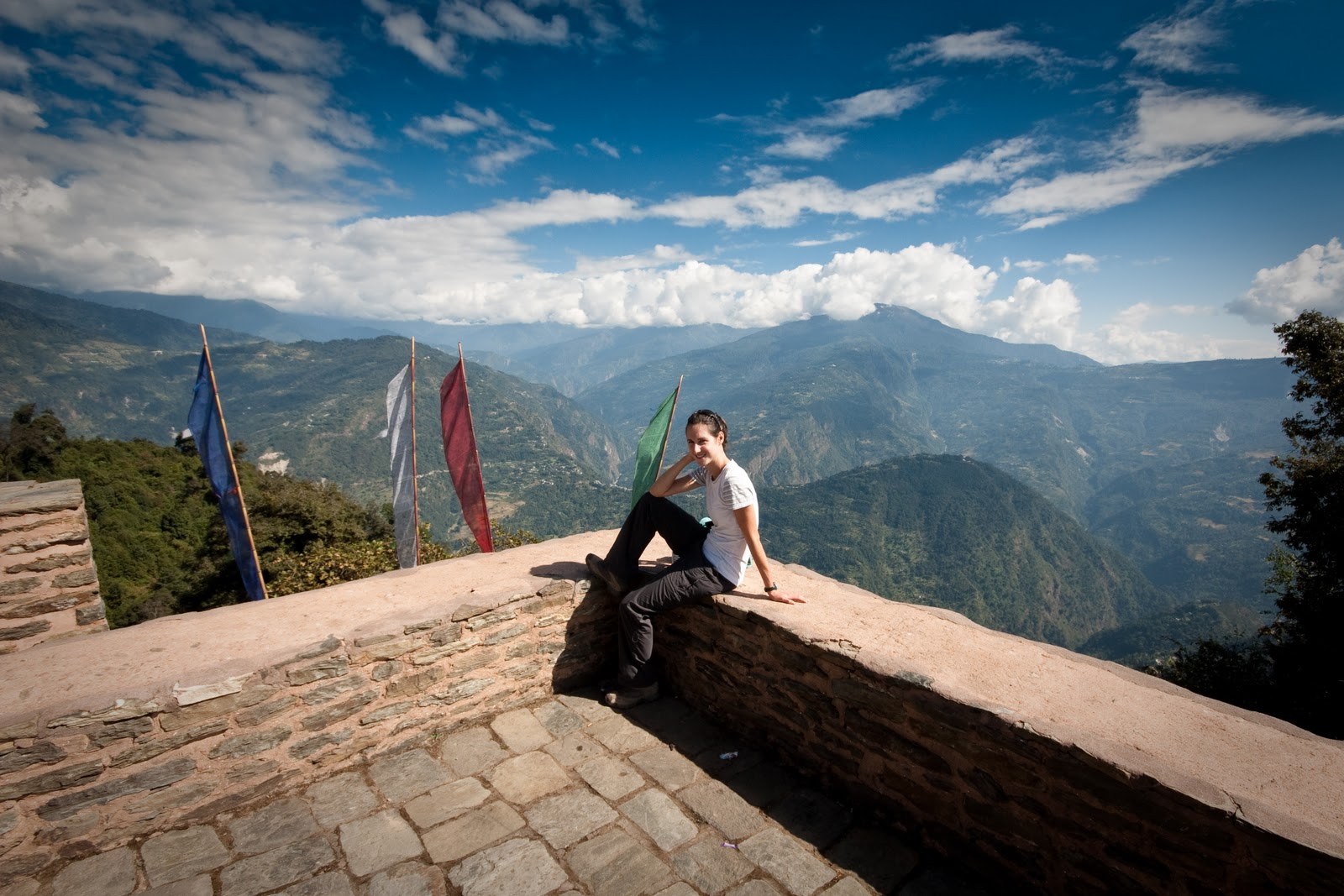
| The mighty Himalaya - arriving in Nepal we were ready to hit the mountains! |
Even before arriving in India we’d been umming and ahhing about whether to visit Tibet, Nepal, Bhutan or Bangladesh. As the Chinese government has imposed strict restrictions on travellers in Tibet and having spoken to others who’d been and realised it wasn’t quite the Shangri-La they were hoping for (comments that at a huge ancient Buddhist monastery it was surrounded by armed Chinese policemen totally disrespecting the practices and customs of the Buddhist monks...) so we struck Tibet off our list. Bhutan is reported to be extortionately expensive with no independent travel allowed (strike two) which meant Nepal was very much on the cards for our taste of Himalaya heights, and Bangladesh we were both keen to visit, especially the Sundarbans thanks to a Mr S. Rushdie and his Midnight’s Children.
 |
| A fitting mnemonic for Nepal |
 |
| The lake at Pokhara |
From Varanasi we headed north to the border of Nepal - destination Pokhara - a lovely lakeside town flanked with impressive mountains from the Annapurna range. Our breather from the mayhem of India took a bit of a rough start. Fortunately we’d actually planned ahead for once and when applying for our Indian visas in Hong Kong asked for a multiple entry as the visa laws have recently changed meaning that a lot of travellers arrive in India, visit Nepal for a week or two before returning to India only to discover when trying to re-enter the country that their visa requires them to spend at least two months away between visits – not ideal if you’re on a six week trip... Anyway while successfully crossing into Nepal we started chatting to an American guy Steve on holiday for a few weeks. Steve joined us for the journey to Pokhara which although we knew would be over 12 hours on a bus none of us expected the journey to be quite as bad as it was! An overcrowded, packed-to-bursting bus was now standard practice, the maniacal hurtling around hairpin bends with cliff drops was just about manageable but a bus loaded with sacks of onions completely filling the aisle meaning it not only stank but to get into/out of the bus required an army crawl on our stomachs, with no fans or A/C in sweltering heat and with all chairs broken so that we were sat bolt upright (actually leaning forwards) whilst the chairs in front were reclined back onto our knees, made the trip to Pokhara one of the worst of our entire journey. We also stopped abruptly at around 2am so that the driver could jump out, lock the bus (with us still inside) and have a quick nap at his friend’s house (whilst we sweated trapped inside). Unfortunately by taking the overnight bus it also meant that we arrived in the sleepy town of Pokhara at 5.30am before any cafes, hostels or basically anywhere was open for business which left us wandering the streets of a deserted, pitch black town after a horrific 12+ hour bus ride. Reflecting on this experience over breakfast, Tom and I felt pretty bad as Steve, who I should point out is middle-aged and on holiday not backpacking, had suggested at the border town that we share a taxi to Pokhara which not only would have saved a lot of time but also kept our stress levels in check, we feeling like hardened (and budget conscious) travellers persuaded him that a taxi was a waste of money and that the bus would be fine...oops.
 |
| Us at ABC |
But with the worst part out of the way our time in Nepal was brilliant and just what we had hoped for. We spent a couple of days in Pokhara before setting off on the Annapurna Base Camp (ABC) trek for 10 days. Along with Steve we took a detour to a small village called Poon Hill to see the sunrise over some of the highest mountains in the world.
 |
| Sunsrise at Poon Hill |
 |
| Machapuchare or "fish tail" a scared mountain in Nepal (never climbed) |
We said farewell to Steve who didn’t fancy the whole 10 days and continued on our way to ABC through tiny, picturesque Nepali mountain villages, sampling the best chocolate cake in Asia (according to TIME magazine) and were greeted at our end point with a stunning amphitheatre view of mountains including Annapurna I, Annapurna South and the sacred, never conquered Machapuchare (Fish Tail).
 |
| Tom and Steve |
The ABC trek was awesome and definitely rejuvenated us after what felt like months of sitting on buses and trains for days at a time. Being out in the mountains with clean air and clear skies is definitely good for the soul!
 |
| The scenery on the trails is truly beautiful |
 |
| Sat high above the clouds with a hot drink admiring the Himalaya - what a great way to spend an afternoon! |
 |
| A welcomed sight after seven days trekking! |
 |
| The porters in Nepal carry almost superhuman loads - often receiving just pennies in remuneration |
 |
| Made it to base camp! |
 |
| Rowing on the lake at Pokhara |
 |
| The peace pagoda at Pokhara, opened by the Dalai Lama |
From Pokhara we returned to the chaos we’d become used to and stayed in Kathmandu for a couple of nights. Along with a Swiss guy we’d met at ABC and his Icelandic friend we toured the city and saw the sights, stopping for a coffee or cocktail to keep us fuelled.
 |
| One of the inhabitants of the "monkey temple" in Kathmandu, the city is in the background |
 |
| Central Kathmandu |
 |
| The Trafalgar Square of Kathmandu! |
 |
| Freak Street used to be the backpacking mecca of Nepal back in the 60's and 70's, the locals named it after the 'freaks' that used to frequent it! |
 |
| Taking a well earned break at base camp |
To re-enter India in the north east near Darjeeling either involved a 17 hour (more like 23 hours) equally horrendous bus journey across the Nepalese valleys to the eastern border or a quick hour and a half flight – we learnt from our mistake the first time around. The flight out of Kathmandu and along the southern ridge of the Himalaya was a real bonus and Tom was thrilled at spotting Everest in the distance.